
The Wellbeing Mood Meter
Project Type
UX Design, Motion Design, Product Illustration
Role
Sr UX Creative - Illustration and Animation
Deliverables
Interactive components for the user experience
Timeline
1.5 months
Problem
Engage a broader audience
There was a business need to find an effective solution that helps both new and current members interact with the platform in a low-friction way. It was clear that there was a new opportunity for long-term engagement among members who may not be seeking active care, and a way to offer a high-value return for those returning to the platform. Essentially, this posed the question: how might we create a new, widely engaging way for members to begin their relationship with Lyra—even those without immediate clinical needs?
Solution
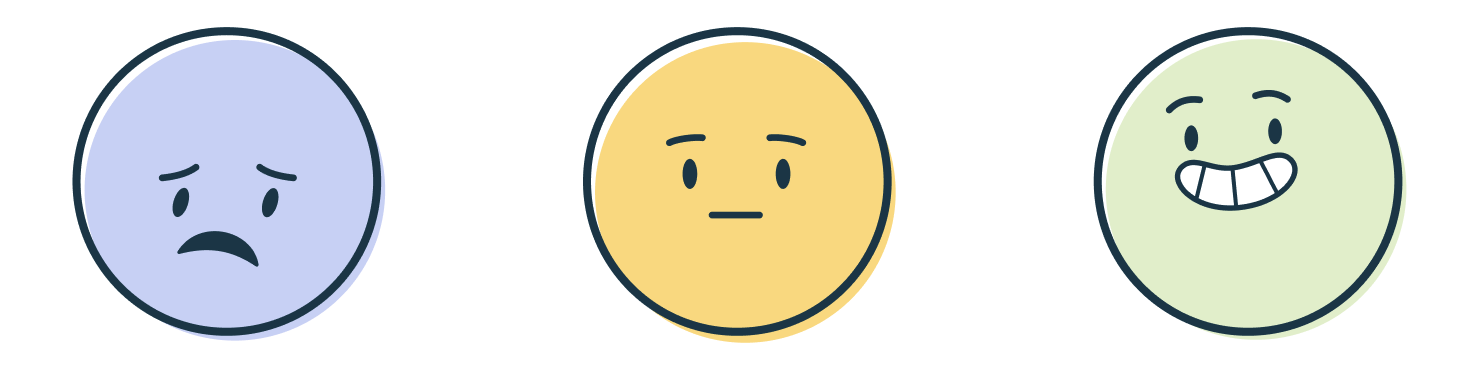
A rating scale with character
As part of the Wellness Check-in project, the team decided to use a mood meter as an easy way to grab users’ attention and encourage them to pause and check in with themselves. The Wellness Check-in experience, along with the mood meter, was ultimately the best solution for members looking for a low-commitment way to find the help they need.
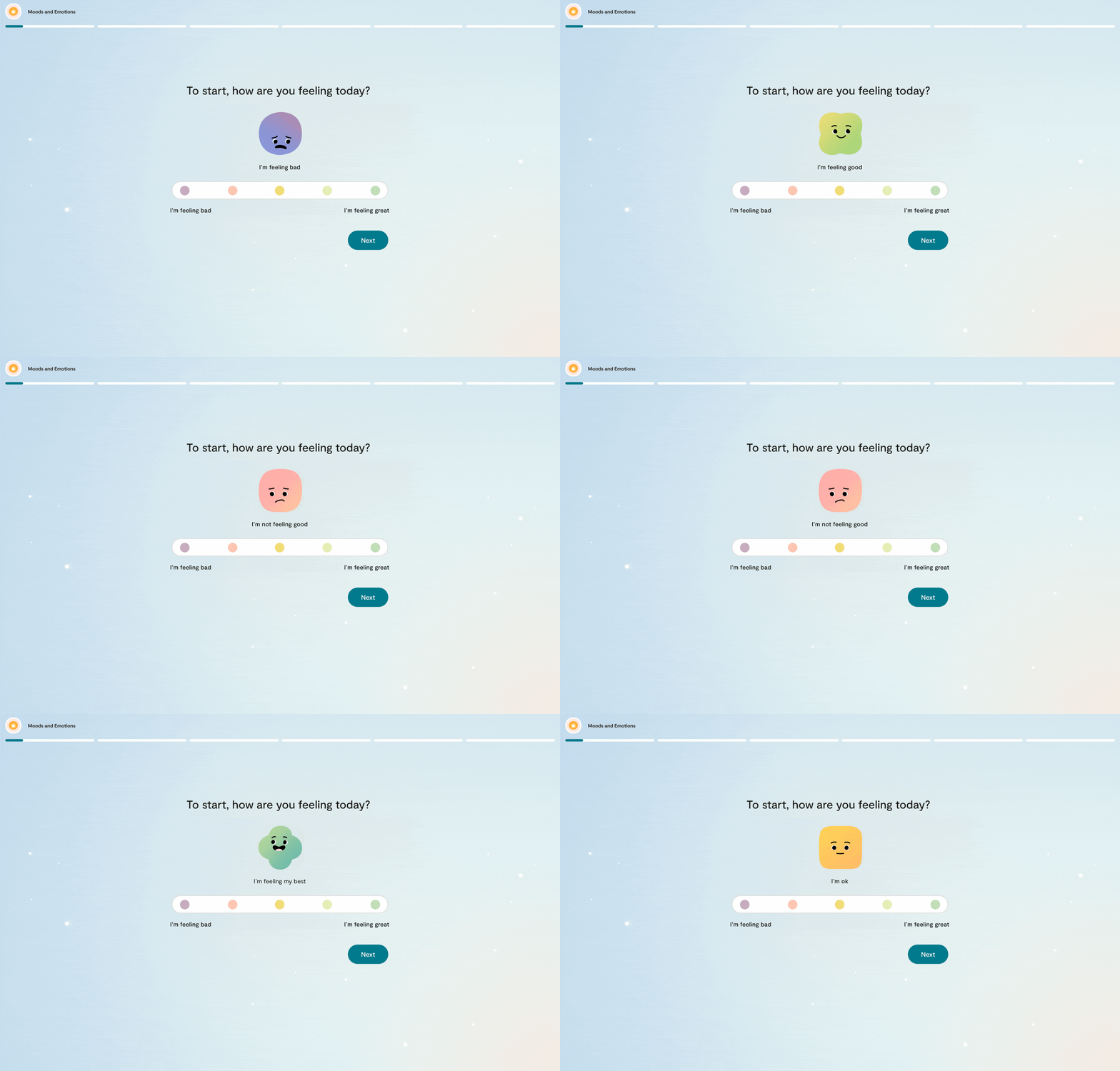
Product Design: Brian Clancy
Strategy & Approach
A “Lyra-fied” mood meter to remember
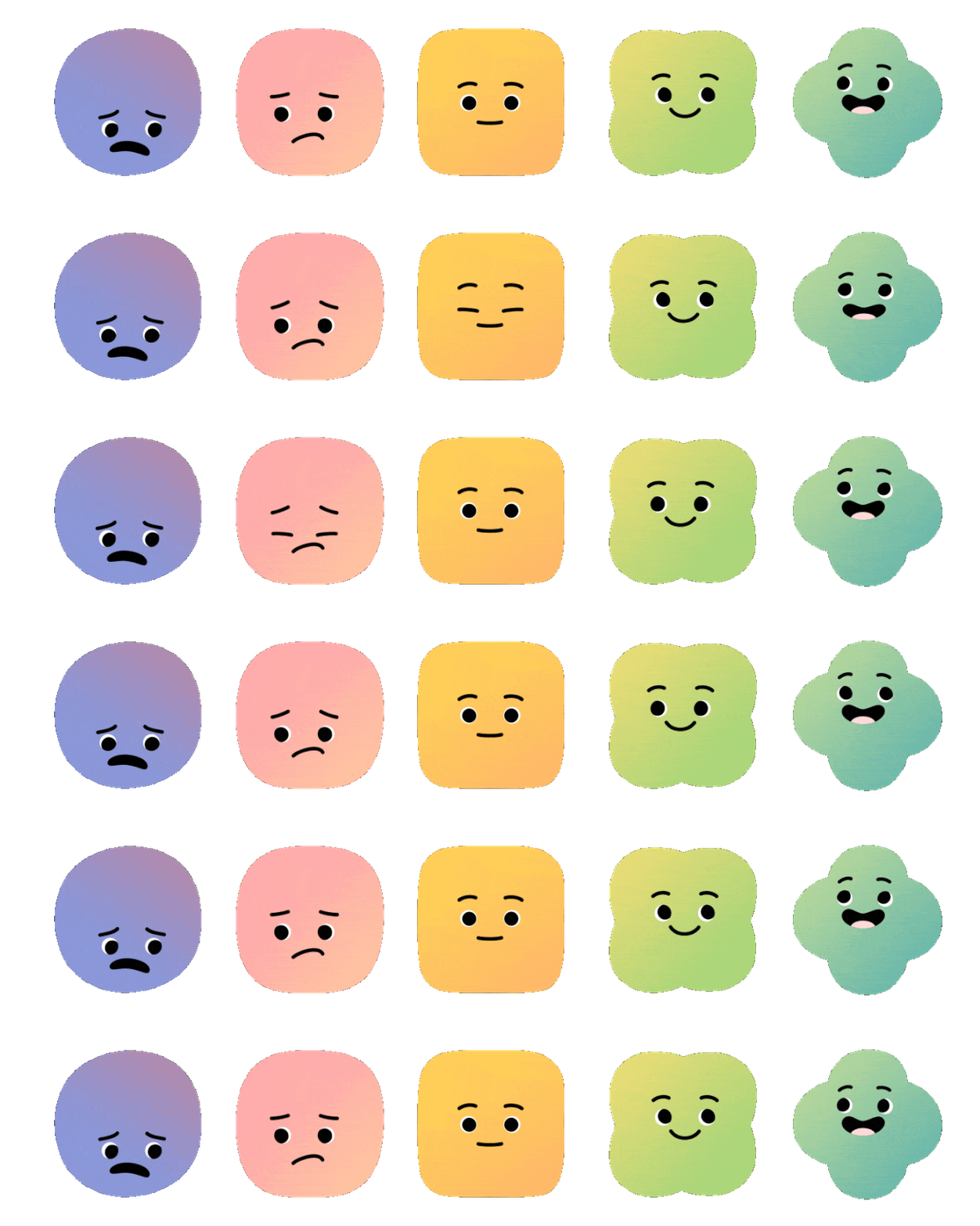
The mood meter featured a straightforward five-slot rating system that depicted a spectrum of emotions from negative to positive. Inspired by similar “satisfactory” rating scales, it included emotive characters representing various moods on the scale. My goal was to make the visuals genuinely reflect what someone might be feeling at that moment by using color and motion, creating an engaging and visually appealing interaction.
I leveraged color psychology to reinforce each mood. Paired with unique shapes, this helps each character and the associated mood feel memorable and “sticky” for the user experience.
Adding motion to each character significantly polished the mood meter experience. Each mood’s animation was designed as a simple loop to provide a quick visual cue, reinforcing its meaning. Every mood included an idle looping state and a transition state, which was programmed to work in harmony with the user tapping on the rating scale.